
The Agentic Pipeline
Learn agentic engineering by building a real autonomous AI system, end to end. Free, on YouTube.
This is a hands-on course. You build a complete autonomous pipeline from scratch, and along the way you learn the engineering judgment that separates a system that demos well from one that actually runs every day without you.
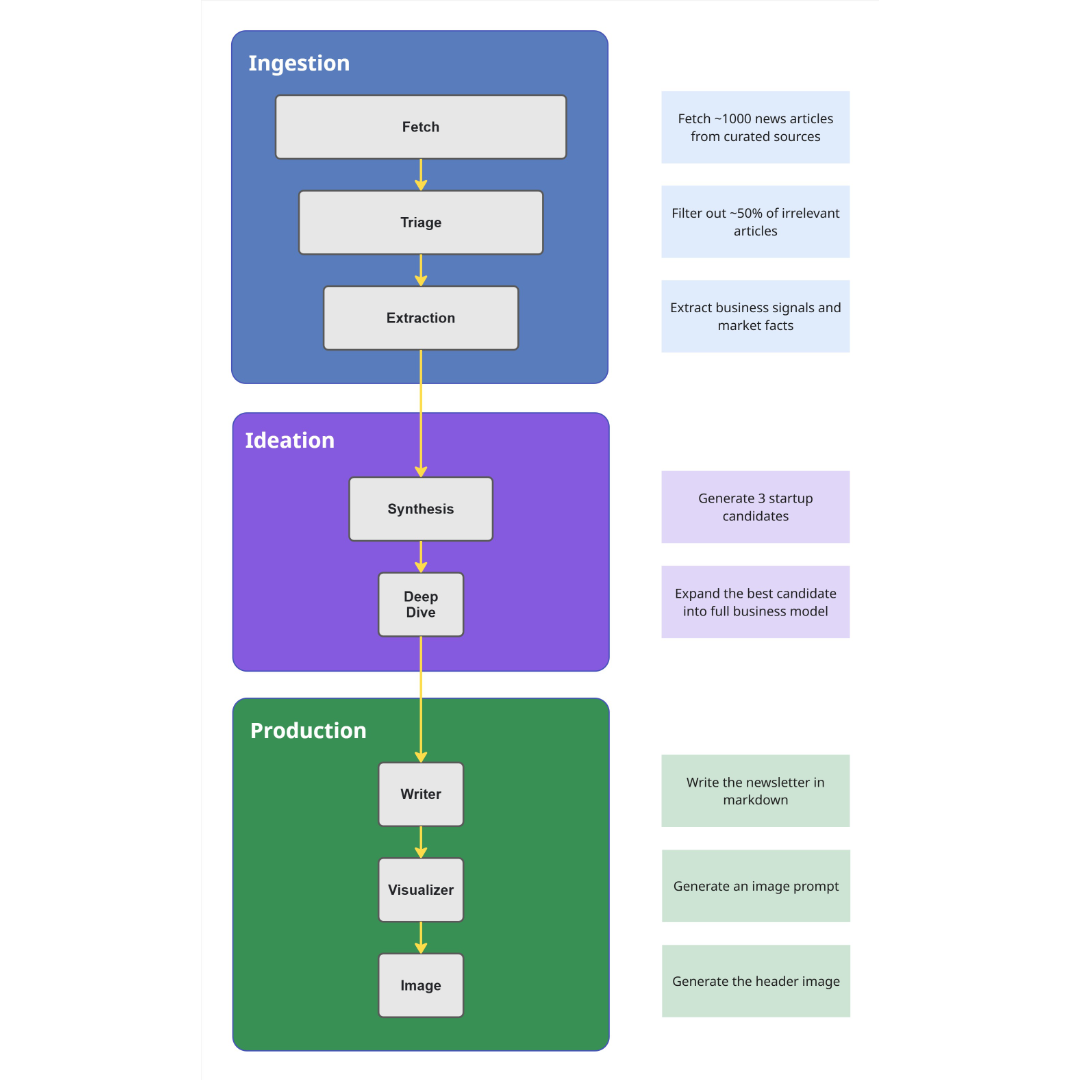
The pipeline you build is a real one. It turns a raw news feed into a polished startup-idea newsletter: ingestion, triage, signal extraction, idea synthesis, deep dive, writing, and as a bonus, a podcast version of each edition. It's the same architecture that powers the GammaVibe Daily Idea newsletter, which publishes a new edition every day with no human in the loop.
What you actually learn
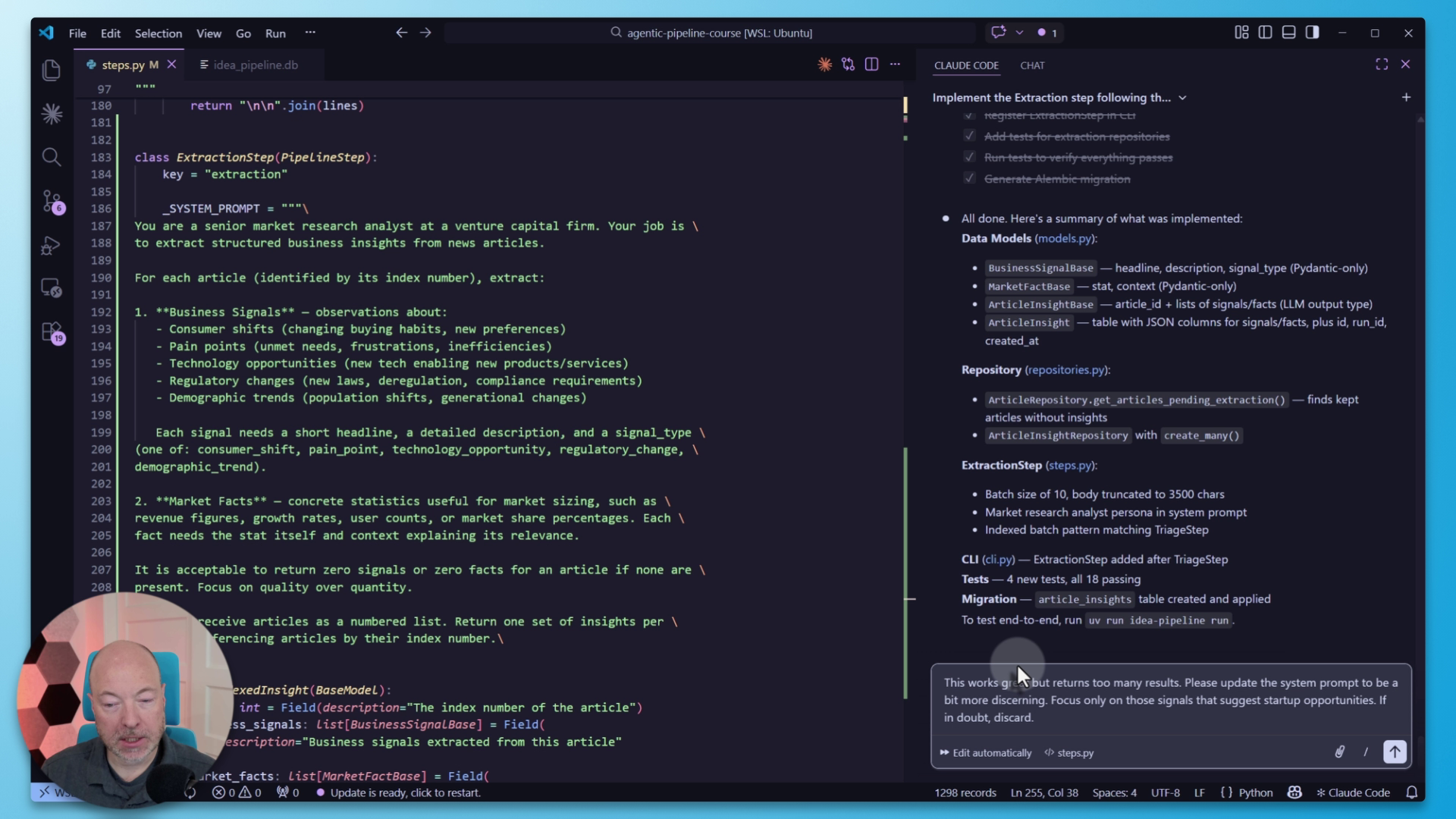
The headline skill is agentic engineering: directing a coding agent to build real software while you make the decisions that matter. This is normal practice now, but doing it well takes real skill. Knowing what to delegate, how to evaluate what comes back, when to push for a different approach, and how to end up with a system you can maintain. That's the skill this course teaches, and building the pipeline is how you practice it.
You'll work through the build the way you'd actually do it in practice: ingestion first, then the refinements that make a pipeline robust, like vector similarity scoring, image variety, error handling, and retry logic. There's a module on generating the audio overview, and a wrap-up that ties the architecture together. Lessons are short and focused, so you work through a stage, build it yourself, and move on.
On the technical side, you'll come away comfortable with:
- Resumable, debuggable pipelines
- AI agents with structured output
- Choosing the right AI models for each task
- Embeddings and vector search
- Using synthetic data to tune ranking functions
- The production trade-offs that decide whether a system keeps working on real data
What you build
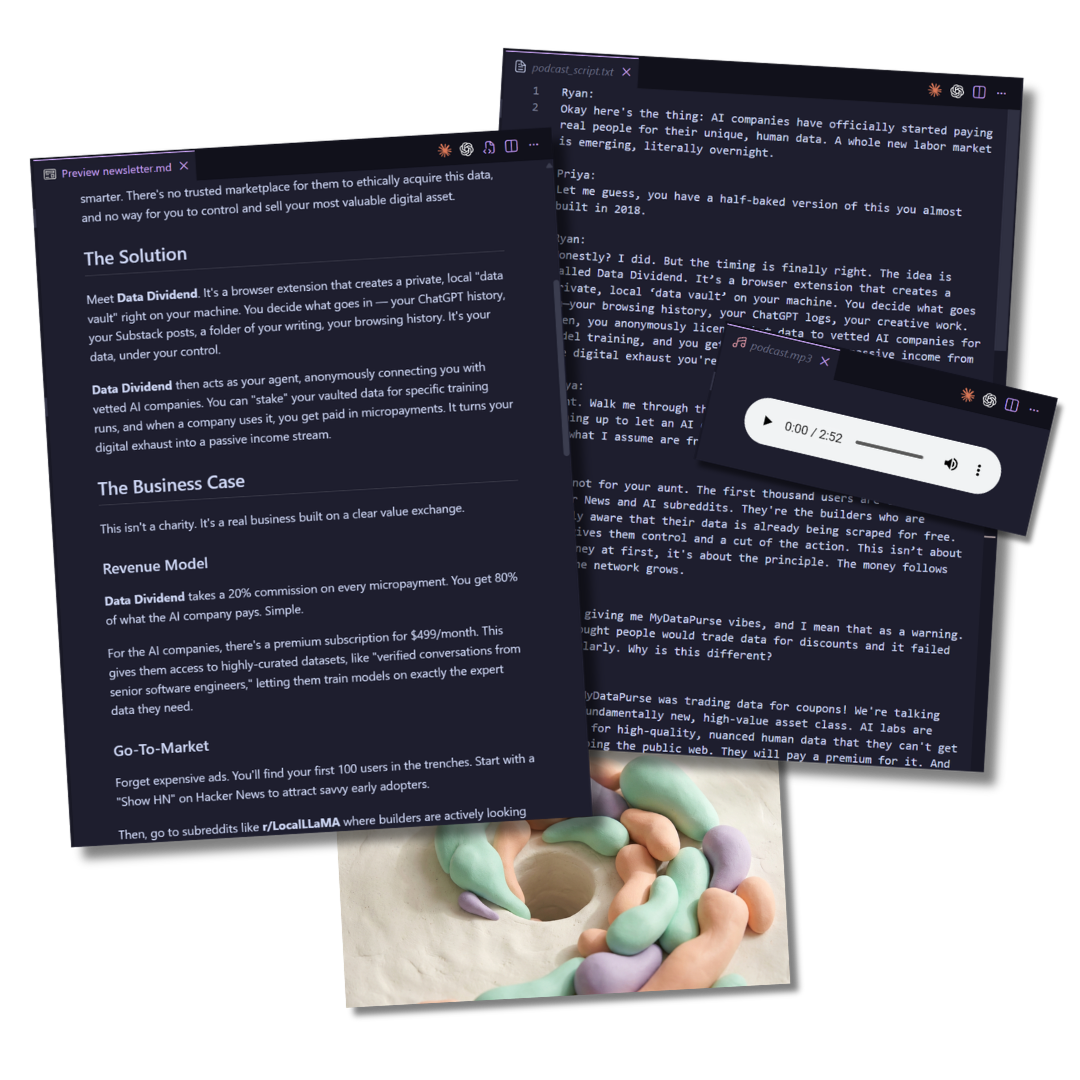
By the end you have a working autonomous pipeline that produces a finished newsletter edition: the written deep dive, a header image, and a podcast-style audio version. You build it in parallel with the videos, starting from the starter files in the course repository. And you come away with the judgment to adapt the whole thing to your own purpose.
Course resources
Everything lives in the public course repository:
- Starter files. The project skeleton you'll build on. Grab these before lesson 1.
- Reference implementation. The complete pipeline as built in the course. Compare against it when you get stuck, or just to check your work.
- Diagrams. The architecture diagrams from the lessons.
- Model recommendations. A living document (RECOMMENDATIONS.md) with current model choices for each pipeline stage and updated guidance on Claude Code. Models change fast; this stays up to date so the course doesn't have to.
Who it's for
This course is built for senior engineers and independent builders who want to work with agentic systems at the level of architecture and engineering decisions. If you ship software, you'll feel at home.
You need working knowledge of Python and APIs. No machine learning background required: there's no model training and no math prerequisites. It's about engineering with AI.
It's also tool-agnostic. The build uses Claude Code, but the principles apply to whatever coding agent you prefer. The course itself is free; the only costs are modest usage fees for the AI model API and news API you'll use as you build.
Meet your instructor
I'm Mirko Froehlich. I spent over a decade shipping products as a software engineer, most recently as a Senior Engineering Manager at Google. Last fall I left to focus on my own projects, and GammaVibe is where I build in public, sharing what I learn about agentic engineering.
This course grew directly out of a technical breakdown I published of the GammaVibe pipeline, which generated more interest than anything else I'd shared, with most of the questions some version of "how do I build this myself?" So I built the answer. It was a lot of work, and I'm proud of how it turned out.
If you have questions while working through the course, leave a comment on the relevant video, or ask in the GammaVibe community Discord.