Neurons in the Cloud
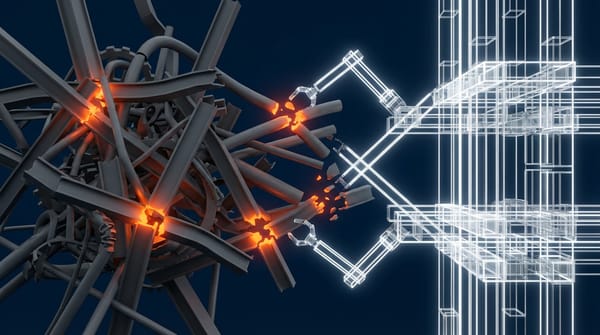
Biocomputing is here, but physical experiments are a bottleneck. The solution is a digital twin for living neurons.


⚡ The Signal
We’ve officially moved beyond silicon. Researchers have successfully kept 800,000 human neurons alive on a chip and are now teaching them to play video games like Doom. This isn't science fiction; it's the dawn of biocomputing. As this field accelerates, the world of wetware is about to collide with the speed of software.
🚧 The Problem
Biological experimentation is painfully slow, expensive, and fraught with ethical hurdles. Each time a researcher wants to test a new neural configuration, they have to create a new physical sample. This process can take weeks or months, and the materials aren't cheap. The feedback loop is glacial, creating a massive friction point that stifles the very innovation this new field promises.
🚀 The Solution
Enter AxonGrid: a cloud-based simulation platform for biocomputing. AxonGrid provides a digital twin for human neuron clusters, allowing researchers to rapidly design, model, and validate experiments in a virtual environment. By simulating the complex interactions of neurons on a chip, it allows scientists to iterate in hours, not months, drastically reducing the cost, time, and friction of physical trials.
🎧 Audio Edition
Listen to Ada and Charles discuss today's business idea.
If you're reading this in your email, you may need to open the post in a browser to see the audio player.
💰 The Business Case
Revenue Model
AxonGrid will operate on a tiered SaaS model based on simulation hours, parallel experiment capacity, and team size. For larger research institutions and private labs, enterprise licenses will be available for on-premise or dedicated cloud deployments. A future revenue stream includes a marketplace for sharing and selling pre-configured neural layouts and validated training protocols.
Go-To-Market
The strategy starts with a free, web-based "Neural Viability Calculator" to capture high-intent leads. We'll then release a single-threaded, command-line version of the simulation engine on GitHub to build credibility and a user base. The paid SaaS platform will offer the clear upgrade path: massive parallelization, advanced visualization, and collaboration tools. This will be supported by a deep content strategy, creating a "Digital Library of Biocomputing Experiments" that attracts researchers via organic search.
⚔️ The Moat
While hardware providers like Cortical Labs are building the physical chips and traditional software like MATLAB exists, they don't solve the pre-physical simulation problem. AxonGrid's true moat is data accumulation. Every simulation run on the platform generates proprietary data on which experimental configurations succeed or fail. This data trains a meta-model that predicts the viability of new designs, making the platform smarter and more indispensable with every user.
⏳ Why Now
The field is at an inflection point. The foundational breakthrough of keeping neurons alive and learning on a chip is no longer theoretical; we have documented cases of it in action. As biocomputing gains momentum, the immediate bottleneck will be the speed and cost of experimentation. Simultaneously, the advancement of AI and computational tools to tackle complex scientific problems is accelerating, creating market readiness for a sophisticated simulation layer. The friction is here, and the need for a solution is growing daily.
🛠️ Builder's Corner
This is just one way to build it, but an API-first approach is key. The backend can be built with Python using FastAPI, leveraging libraries like NumPy and Pandas for the core simulation engine. PostgreSQL is a solid choice for storing experimental configurations and results data. The frontend can be a React/TypeScript application for visualization, but the MVP should focus on a robust, scriptable API. Researchers live in Python-based workflows, and allowing them to integrate AxonGrid directly into their existing scripts is the fastest path to adoption.
Legal Disclaimer: GammaVibe is provided for inspiration only. The ideas and names suggested have not been vetted for viability, legality, or intellectual property infringement (including patents and trademarks). This is not financial or legal advice. Always perform your own due diligence and clearance searches before executing on any concept.